Update: US Supreme Court decision ends Virginia’s redistricting fight, reshapes 2026 races. All 7 Democratic Candidates for CD 1 remain in the race as of 5/23/26.
On 4/21/26, Virginia voters approved HB1384, a redistricting referendum that gives the “General Assembly the authority to go around the state’s bipartisan independent commission — which typically redraws maps after a decennial census — if other states undergo mid-decade redistricting.” (And they did). When 97% of the votes had been counted, The Associated Press called the race at 8:49 PM.
- Yes: 51.5%
- No: 48.6%
Voters turned out in droves—so much, in fact, that the early vote surpassed one million. Of the 128,000 voters who cast ballots in Henrico County, about 64% voted “Yes.” The referendum’s passing “could help nullify Republican gains elsewhere” and lead to a gain of four seats in the midterm elections, putting Democrats on a path to a majority in Congress.
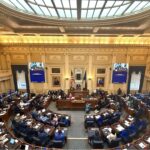
After the election, Democratic state House Speaker Don Scott declared that “Virginia just changed the trajectory of the 2026 midterms…At a moment when Trump and his allies are trying to lock in power before voters have a say, Virginians stepped up and leveled the playing field for the entire country.”
The redistricting referendum was the state’s hottest political issue of 2025-26. Even Virginians and state representatives who generally oppose gerrymandering supported redistricting in the face of other states “skewing their Congressional districts to favor the Republican Party,” actions that resulted in federal policies targeting “marginalized and vulnerable people.”
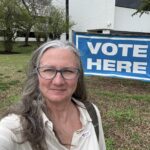
The high stakes meant that supporters of the referendum pulled out all the stops to get out the vote. Multiple democratic party committees, federal and state representatives, and the group Virginia for Fair Elections came out in force to support the referendum. To give you an idea of the scope, here are links to pictures and ads:
HB1384 had its detractors as well. Aggressive campaigning against the referendum began immediately. President Trump opposed it. Congressman Wittman filed a lawsuit against state election officials to challenge it, yet didn’t condemn Republican-led redistricting in other states after President Trump pressured them to change their maps to favor Republicans. Dark money groups (one allegedly backed by billionaire Peter Thiel) sent voters numerous and contradictory mailers and ads that sowed confusion among some voters. Some ads compared redistricting to Jim Crow oppression. And Steve Bannon called Democrats “demonic” for pursuing redistricting.
Collectively, the referendum campaigns raised about $85 million, making HB1384 “Virginia’s most expensive ballot question” (see also the Virginia Public Access Project).
Legal challenges to redistricting
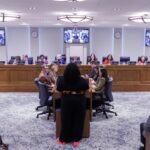
On April 27, 2026, the Virginia Supreme Court heard oral arguments for Virginia House Speaker Don Scott v. Virginia Republican Senate Minority Leader Ryan McDougle. This lawsuit was filed in October 2025 over concerns that the procedural requirements for a constitutional amendment weren’t lawful. “The state’s highest court now must decide: Was the redistricting election — and the new congressional map voters supported — illegitimate on technical grounds?”
Another lawsuit is also ongoing: Republican National Committee v. Virginia Department of Elections Commissioner Steven Koski. Tazewell Circuit Court issued an order blocking certification of the election.
In response, “Attorney General Jay Jones filed a motion Thursday seeking to halt the judge’s order until an appeal can be heard.” The Virginia Supreme Court agreed to take up the case, but as of this writing no hearings have been scheduled. UPDATE: VA Supreme Court Denies AG’s Motion
In yet another lawsuit, Republican National Committee v. Virginia State Board of Elections, Republican plaintiffs challenged “state lawmakers’ authority to alter the congressional maps approved by the Virginia Supreme Court in 2021” and requested a preliminary injunction to block the map’s use. On 4/20/26, the Richmond City Circuit Court declined to block it.
Prior to the 4/21 election, Tazewell County Circuit Court Judge Jack Hurley Jr. ruled “that Democrats’ redistricting push was improperly done and temporarily blocked it.” Nevertheless, the state Supreme Court ordered the referendum to go forward. An earlier lawsuit that challenged the redistricting constitutional amendment ballot language was initiated by Congressmen John McGuire and Rob Wittman and was subsequently dismissed.
What happens next?
If redistricting can proceed, the Virginia State Board of Elections will certify the election results. The new maps will shift the balance of Virginia’s congressional seats from 6-5 to 9-2 or even 10–1 in favor of Democrats. Major portions of Western Henrico would shift to the Fifth district (the third district change here in five years). The new Fifth District also includes half of Chesterfield and parts of Hanover counties.
Learn how redistricting could affect you (via the non-partisan VPAP)
The 2026 CD1 Democratic primary candidates and CD1’s incumbent, Rob Wittman, must choose a new district in which to run, assuming they don’t pursue alternatives.
As of this writing, Wittman has not yet declared anything. The Democratic candidates from the former CD1 primary announced they’ll run in the following new districts:
- CD1: Tim Cywinski (press release)
- CD5: Salaam Bhatti (article), Shannon Taylor, and Mel Tull
- CD8: Elizabeth Dempsey Beggs, Jason Knapp (press release), and Lewis Littlepage
As of this writing, Ericka Kopp is undeclared. Her press release indicated that “I respect the decision of the people…Should Virginians approve redistricting, the campaign will issue an additional statement.”
Lastly, we’ll vote in the midterm elections this November. Regardless of what happens with redistricting, make a plan to vote!
Learn More
- Get to know the Democratic primary candidates and their legislative agendas.