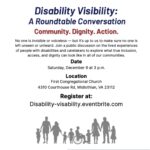
Members of the disability community gathered at the First Congregational Church in Chesterfield on December 6th to engage in a public discussion about their lived experiences, challenges, and the daily issues they face.
Tim Cywinski hosted the event. The other panelists were:
- Cheryl Myers Johnson – mom, grandmother, rare disease legislation advocate, and former administrator of the 2025-26 General Assembly Facebook page
- Leslie Pakula – social worker who has served the Infant and Toddler Connection of Chesterfield for twenty-seven years
- Heather Massey – suburban mom and caregiver to her disabled daughter
- Sadie Massey – digital artist who has served as an Equity Ambassador while an HCPS student and is a General Ambassador for the Muscular Dystrophy Association
- By happy chance, two youth attendees also participated
Gail Christie of the First Congregational Church ensured a warm, welcoming venue. Clover Hill District Supervisor Jessica Schneider and Delegate-elect Lindsey Dougherty (D HD75) also joined the event.
Tim Cywinski was frank and transparent about wanting to improve his knowledge about disability issues. His eagerness to learn set the tone for a deep and fruitful conversation about disability and caregiving.
Panelists and attendees shared many compelling—and occasionally heartbreaking—stories about the obstacles, problems, and financial hardships disabled folks face. These included inadequate public school support, inaccessible buildings, and the sky-high cost of various disability/learning aids. The discussion wasn’t all bleak; there were often moments of humor, solidarity, and hope.
The three youth panelists painted vivid pictures about living with their disabilities, which included visual impairment, postural orthostatic tachycardia syndrome (POTS), depression, and neuromuscular conditions. One of them had even written a book about her experience navigating life with her condition.

Attendees stepped up to the microphone nonstop to share their experiences and wealth of knowledge. One raised the issue of Medicare’s medical necessity denial having a negative effect regarding coverage in other health insurances, which can result in less coverage for disabled people.
A mother was inspired to speak about her challenges even though she hadn’t planned to. She described the hardship of homeschooling her three children after the school failed to provide enough support for their learning disabilities.

A cane-using man asked about what would happen to Medicaid in Virginia if massive federal bill to slash billions becomes law? Panelists were quick to provide information and support.
The group also discussed actions people can take to develop solutions and help disabled people thrive, not just survive. For example, Myers Johnson emphasized that in addition to calling and writing our state representatives, it’s equally important if not more so to meet members of the General Assembly and show up to hearings in person.
Delegate-elect Dougherty addressed the group and invited folks to offer her ideas for legislation. During and after the roundtable, panelists and participants met new people and obtained helpful information. Disability is frequently isolating, so this event helped bridge gaps.
At a time when education, empathy, and compassion are under attack, the Disability Visibility Roundtable provided a safe place for some of society’s most vulnerable members to make their voices heard.
Take Action
- When the 2026 General Assembly begins, adopt your disability-related legislation of choice to support and then contact your representatives about it.
Learn More
- There are too many disability organizations to list here, but you can start with the resources provided by the panelists: Virginia Voice, Dysautonomia International, The disAbility Law Center of Virginia, Virginia Autism Support Groups, Jacob’s Chance, and Becoming rentAble.