“They don’t speak English, so they are scared, afraid, and concerned,” Dalia Tejada says of migrant farm workers in Virginia.
Tejada is an Outreach Specialist with Central Virginia Legal Aid Society. She works on the Virginia Farmworker program providing crucial legal aid, health screenings, tax help, and community support (shirts, hats, sun protection, towels, water, etc.) directly to migrant and seasonal farmworkers through regular visits, aiming to build trust.
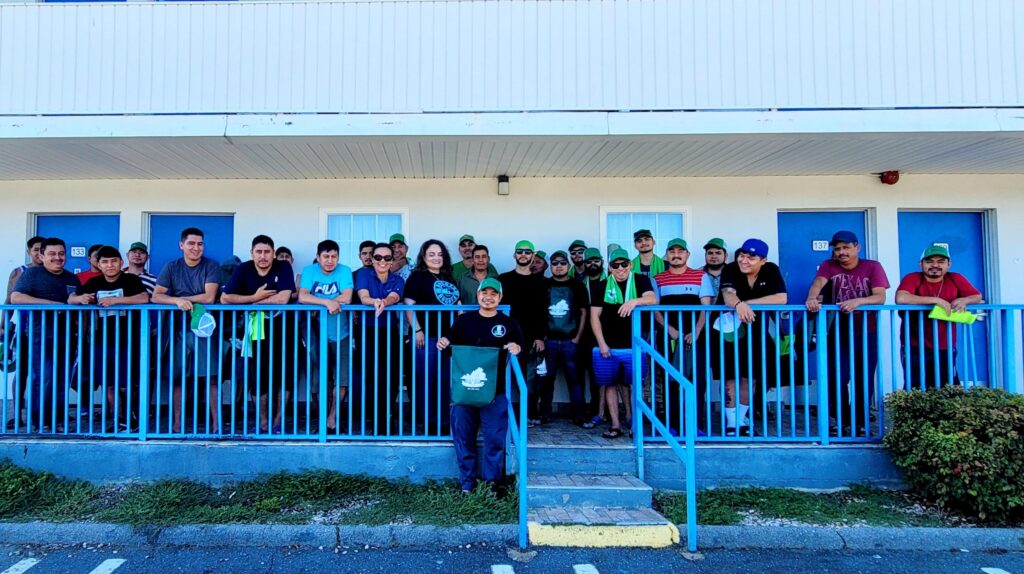
The migrant farmworkers come to Virginia annually for 6-9 months, working in tobacco fields, oyster farms, and even Christmas tree farms. “Everything that they make, it goes back to their families, they are very focused. On Friday, you see them go to the Mexican store and send the check to their kids and their wife,” says Tejada.
Last year, the program assisted about 5200 H-2A workers, some of whom have been coming here to the same farms for twenty years.
But since ICE has ramped up deportation efforts, the mission has changed somewhat. The Farmworker program through CVLAS now must try to protect these workers from being taken off the streets by ICE agents. “I tell them not to be scared, but to have the name of their boss in their pocket, like an emergency contact. They have constitutional rights even though right now we are not respecting due process. They are scared.”
Contracts for these workers go out in January, and Tejada does not yet know if the number of workers coming to the U.S. will drop because of ICE. They previously worked for less than minimum wage, with no overtime pay.
According to the Economic Policy Institute, a new problem is that workers stand to make even less this upcoming year. President Trump’s new H-2A wage rule will radically cut the wages of all farmworkers while also requiring them to pay for housing (in previous years, housing was provided for them).
The EPI estimates these changes could reduce the workers’ annual wages by 9%. “All of this is causing pain to us, to give them bad news. They are willing to work because they are hard workers,” says Tejada.
She stays in touch with the migrant workers during the winter and helps them with their contracts to return to work. Without these workers, it could be devastating to farms. “If we don’t have those farmworkers, the farmers can go bankrupt. The farmers are very affected.”
It’s not an easy life for the migrants. Besides the hard work and long hours – work that Americans are not inclined to do – Tejada says the conditions the farmworkers live in while here are awful, “terrible conditions, nothing in the kitchens, the washers don’t always work, there are no dryers, they need to hang the clothes, they need to start to improve the housing conditions if workers have to pay.”
The program is the only organization that assists farmworkers in the Commonwealth.
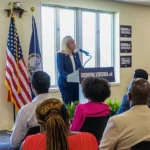
Tejada, a Columbian native who is now a U.S. citizen, is very passionate about the work her team does. She relates to the workers who are afraid of ICE. “I tell them I don’t look like I’m from here either. I’m scared, too. I’m from Columbia, but I’m a U.S. citizen, but right now there is a lot of disrespect.”
Tejada was recognized with an award for her work in October, but she says the farmworkers are the ones who deserve the recognition, stating, “It is for their dignity, and the resilience they have. They have all my respect.”
Take Action
- THE CVLAS Farmworker program relies on donations. If you’re able, please consider a personal or corporate donation.
- Go to www.cvlas.org and click the big “DONATE” button at the top.
- Please make a note in the comments box at the bottom of the first page (when you provide your name and address) and indicate you’d like your donation to go to the Farmworker program. That way you’ll be sure your money is earmarked directly to that program.